

Ever wonder why monkeys make us smile or why manatees are called sea cows?
The world of animals that start with ‘M’ is full of surprises and fun facts that’ll make you go “wow!”
From mighty mammals to tiny insects, these creatures have amazing stories to tell.
Some might be living in your backyard, while others are swimming in deep oceans or climbing tall trees in faraway jungles.
For curious kids, animal lovers, and anyone who enjoys learning new things, let’s explore the ‘M’ section of nature’s alphabet together.
Get ready to meet some incredible animals and uncover secrets about them that might just surprise you!
Popular Animals
1. Monkey

A small to medium-sized primate with a long tail, agile limbs, and expressive facial features.
Origin: Found in Africa, Asia, Central, and South America.
Habitat: Rainforests, savannas, mountains, and urban areas.
Scientific Name: Primates (various species).
Fun Facts:
- Some monkeys use tools, such as rocks, to crack open nuts.
- Capuchin monkeys rub certain plants on their fur as a natural insect repellent.
2. Moose

A large, heavy-bodied mammal with long legs, a humped back, and broad, flat antlers in males.
Origin: Native to North America, Europe, and Asia.
Habitat: Forested areas near lakes, rivers, and marshes.
Scientific Name: Alces alces
Fun Facts:
- Moose are excellent swimmers and can dive underwater to eat aquatic plants.
- Their antlers can grow up to six feet wide and weigh over 30 pounds.
3. Meerkat

A small, slender mammal with a pointed face, dark eye patches, and a long tail.
Origin: Native to Africa, particularly in the Kalahari and Namib deserts.
Habitat: Arid regions, including deserts and dry savannas.
Scientific Name: Suricata suricatta
Fun Facts:
- Meerkats live in groups called mobs and take turns standing guard for predators.
- They have a special membrane to protect their eyes from sand while digging.
4. Manta Ray

A large, flat-bodied fish with wide, triangular pectoral fins and a whip-like tail. I
Origin: Found in oceans worldwide, primarily in warm waters.
Habitat: Open ocean and coral reefs in tropical and subtropical regions.
Scientific Name: Manta birostris (giant manta ray), Manta alfredi (reef manta ray).
Fun Facts:
- Manta rays have the largest brain-to-body ratio of any fish.
- They can leap several feet out of the water, possibly to remove parasites or communicate.
5. Macaw

A brightly colored parrot with a long tail, strong curved beak, and striking feather patterns.
Origin: Native to Central and South America.
Habitat: Tropical rainforests, woodlands, and savannas.
Scientific Name: Ara (various species).
Fun Facts:
- Macaws can mimic human speech and sounds with incredible accuracy.
- Their beaks are strong enough to crack open hard nuts and seeds that other animals cannot eat.
6. Manatee
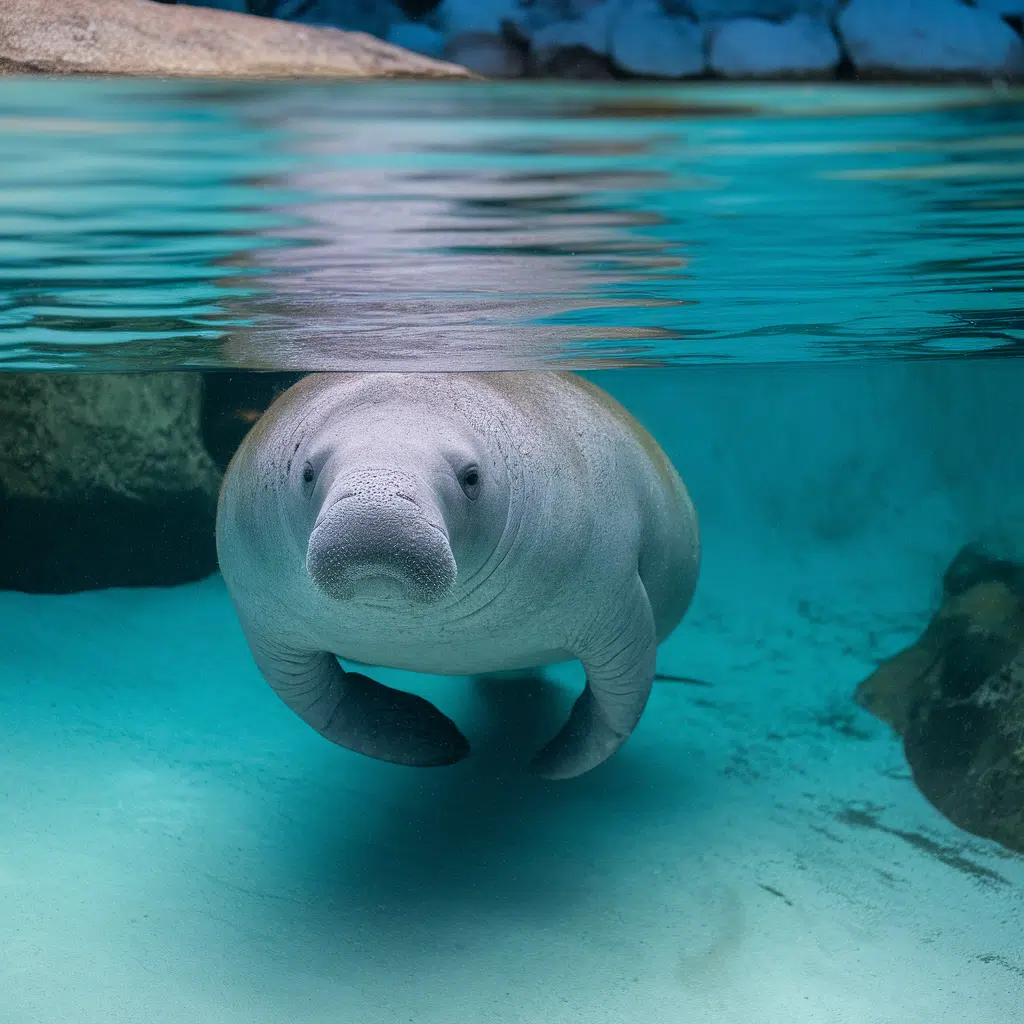
A large, gray, barrel-shaped aquatic mammal with paddle-like flippers and a broad, whiskered snout. It has small eyes, a flat tail, and thick, wrinkled skin.
Origin: Native to the coastal waters of North and South America, West Africa, and the Amazon Basin.
Habitat: Warm, shallow waters such as rivers, estuaries, and coastal bays.
Scientific Name: Trichechus (various species).
Fun Facts:
- Manatees are also known as “sea cows” due to their slow movement and grazing habits.
- Despite their size, they are gentle and have no natural predators.
7. Mongoose

A small, elongated mammal with a slender body, pointed snout, and bushy tail. It has short legs, sharp claws, and a coat that varies in color from gray to brown.
Origin: Found in Africa, Asia, and parts of Southern Europe.
Habitat: Grasslands, forests, and scrublands near water sources.
Scientific Name: Herpestidae (various species).
Fun Facts:
- Mongooses are resistant to snake venom, allowing them to hunt venomous snakes.
- They live in social groups and use complex vocalizations to communicate.
8. Mallard Duck

A medium-sized duck with an iridescent green head (males), yellow bill, and a white neck ring. It has webbed feet, a broad body, and a curled tail feather in males.
Origin: Native to North America, Europe, and Asia.
Habitat: Lakes, ponds, rivers, and wetlands.
Scientific Name: Anas platyrhynchos
Fun Facts:
- Mallards are one of the most widespread and adaptable duck species in the world.
- They can sleep with one eye open by shutting down half of their brain.
9. Magpie

A black-and-white bird with a long tail, sharp beak, and glossy plumage with iridescent blue or green hues. It has strong legs and a distinctive cawing call.
Origin: Found in Europe, Asia, North America, and Australia.
Habitat: Woodlands, grasslands, and urban areas.
Scientific Name: Pica pica (Eurasian magpie) and related species.
Fun Facts:
- Magpies are highly intelligent and can recognize themselves in mirrors.
- They have complex social structures and can mimic human speech.
10. Mountain Lion

A large, muscular wild cat with a sleek, tawny coat and a long, thick tail for balance. It has sharp retractable claws, powerful limbs, and keen eyesight for hunting.
Origin: Native to the Americas, from Canada to South America.
Habitat: Mountains, forests, deserts, and grasslands.
Scientific Name: Puma concolor
Fun Facts:
- Mountain lions can jump up to 18 feet high and 40 feet in distance.
- Unlike other big cats, they cannot roar but can produce a variety of vocalizations, including chirps and whistles.
11. Musk Ox

A large, shaggy-coated mammal with curved horns and a thick woolly undercoat that insulates against extreme cold. It has a stocky build, short legs, and a broad head.
Origin: Native to Arctic regions of North America and Greenland.
Habitat: Tundra, open plains, and cold, remote areas.
Scientific Name: Ovibos moschatus
Fun Facts:
- Musk oxen form protective circles around their young when threatened.
- Their thick coat allows them to survive extreme temperatures as low as -40°F.
12. Mouse

A tiny rodent with a pointed snout, large round ears, and a long, thin tail covered in fine hair. It has small, sharp claws and soft, short fur that varies in color.
Origin: Found worldwide in various environments.
Habitat: Fields, forests, urban areas, and homes.
Scientific Name: Mus (various species).
Fun Facts:
- Mice have an excellent sense of smell and use their whiskers to detect vibrations.
- They can squeeze through spaces as small as a dime due to their flexible bodies.
13. Monarch Butterfly

An orange and black butterfly with large, delicate wings covered in tiny scales. It has a slender body, long antennae, and white-spotted black wing edges.
Origin: Native to North and South America, but migrates across continents.
Habitat: Meadows, fields, and gardens with milkweed plants.
Scientific Name: Danaus plexippus
Fun Facts:
- Monarch butterflies migrate thousands of miles from North America to Mexico each winter.
- They taste bad to predators because they absorb toxins from milkweed plants.
14. Mudskipper

A small fish with bulging, movable eyes, a broad mouth, and muscular pectoral fins adapted for crawling on land. It has smooth, slimy skin that retains moisture for breathing out of water.
Origin: Found in tropical and subtropical regions of Africa, Asia, and Australia.
Habitat: Mudflats, mangrove swamps, and tidal pools.
Scientific Name: Periophthalmus (various species).
Fun Facts:
- Mudskippers can breathe through their skin and mouth lining when out of water.
- They use their fins to “skip” across the mud, making them one of the few fish that can walk on land.
15. Mule

A sturdy, horse-like animal with long ears, strong legs, and a short, coarse mane. It has a muscular build, a narrow face, and hooves adapted for rough terrain.
Origin: A hybrid of a male donkey and a female horse, domesticated worldwide.
Habitat: Farms, mountains, and arid landscapes.
Scientific Name: Equus asinus × Equus caballus
Fun Facts:
- Mules are stronger and more endurance-driven than horses and donkeys.
- They are naturally sterile and cannot reproduce due to their mixed genetics.
16. Monitor Lizard

A large, muscular reptile with a long, forked tongue, sharp claws, and tough, scaly skin. It has a powerful tail used for balance, swimming, and defense.
Origin: Native to Africa, Asia, and Australia.
Habitat: Forests, grasslands, swamps, and deserts.
Scientific Name: Varanus (various species).
Fun Facts:
- Some monitor lizards, like the Komodo dragon, have venomous bites.
- They are excellent climbers and swimmers, making them highly adaptable predators.
17. Mayfly

A delicate insect with two pairs of transparent wings, long thread-like tails, and a soft, slender body. Its legs are thin, and it has large, compound eyes.
Origin: Found worldwide in freshwater habitats.
Habitat: Rivers, lakes, ponds, and streams.
Scientific Name: Ephemeroptera (various species).
Fun Facts:
- Mayflies have the shortest adult lifespan of any insect, living for just a few hours to a few days.
- They are an important food source for fish and birds in aquatic ecosystems.
18. Milk Snake

A slender, brightly colored snake with smooth, shiny scales and red, black, and yellow bands. It has a narrow head and round, black eyes.
Origin: Native to North and Central America.
Habitat: Forests, grasslands, and rocky areas.
Scientific Name: Lampropeltis triangulum
Fun Facts:
- Milk snakes are non-venomous but mimic the appearance of venomous coral snakes for protection.
- They get their name from an old myth that they drink milk from cows, which is untrue.
19. Millipede

A long, cylindrical arthropod with many tiny legs, segmented body, and a tough, flexible exoskeleton. Its body color ranges from brown to black with some having bright markings.
Origin: Found worldwide in moist environments.
Habitat: Forest floors, gardens, and decaying plant matter.
Scientific Name: Diplopoda (various species).
Fun Facts:
- Millipedes do not bite or sting but release a defensive chemical that can deter predators.
- Despite their name, they don’t have a thousand legs—most species have between 80 and 400.
20. Mole

A small, burrowing mammal with velvety fur, tiny eyes, and large, powerful front claws for digging. It has a cylindrical body and a short, nearly hairless tail.
Origin: Found in North America, Europe, and Asia.
Habitat: Underground tunnels in forests, grasslands, and gardens.
Scientific Name: Talpidae (various species).
Fun Facts:
- Moles can dig up to 15 feet of tunnels in a single hour.
- They have poor eyesight but an exceptional sense of touch and smell.
21. Moray Eel

A long, snake-like fish with scaleless, smooth skin and sharp, backward-facing teeth. It has a large mouth and powerful jaws for gripping prey.
Origin: Found in tropical and subtropical ocean waters worldwide.
Habitat: Coral reefs, rocky crevices, and coastal waters.
Scientific Name: Muraenidae (various species).
Fun Facts:
- Moray eels have a second set of jaws in their throat to help pull prey into their stomach.
- They secrete a mucus layer over their skin, which helps protect them from parasites.
22. Mediterranean Monk Seal

A sleek, dark-colored marine mammal with a rounded head, short whiskers, and large, expressive eyes. It has a streamlined body with strong flippers for swimming.
Origin: Native to the Mediterranean Sea, North Africa, and the North Atlantic.
Habitat: Coastal caves, rocky shores, and warm, shallow waters.
Scientific Name: Monachus monachus
Fun Facts:
- The Mediterranean monk seal is one of the world’s rarest marine mammals.
- Unlike most seals, they prefer resting on open beaches instead of ice or floating platforms.
23. Mexican Gray Wolf

A medium-sized wolf with thick fur in shades of gray, brown, and black, with a bushy tail. It has strong, lean legs and a narrow, pointed muzzle.
Origin: Native to North America, primarily in Mexico and the southwestern United States.
Habitat: Forests, mountains, and grasslands.
Scientific Name: Canis lupus baileyi
Fun Facts:
- The Mexican gray wolf is the smallest and most endangered subspecies of the gray wolf.
- They are highly social animals that live in packs with strong family bonds.
24. Masked Owl

A nocturnal bird with a heart-shaped white face, dark eyes, and a mix of brown and black spotted feathers. It has powerful talons and broad wings for silent flight.
Origin: Native to Australia, Indonesia, and surrounding islands.
Habitat: Forests, woodlands, and open grasslands.
Scientific Name: Tyto novaehollandiae
Fun Facts:
- Masked owls have an exceptional sense of hearing, allowing them to detect prey in complete darkness.
- Unlike many owls, they do not hoot but produce a variety of screeches and hissing sounds.
25. Marine Iguana

A dark, rough-skinned lizard with a spiky dorsal crest and a flattened tail for swimming. It has long claws and a blunt snout used for scraping algae off rocks.
Origin: Native to the Galápagos Islands.
Habitat: Rocky shorelines, beaches, and coastal mangroves.
Scientific Name: Amblyrhynchus cristatus
Fun Facts:
- Marine iguanas are the only lizards in the world that forage in the ocean.
- They sneeze out excess salt absorbed from seawater through specialized glands.
Rare Animals
- Malayan Tapir
- Malabar Civet
- Malagasy Giant Jumping Rat
- Mountain Pygmy Possum
- Malagasy Leaf-nosed Snake
- Margay
- Mexican Burrowing Toad
- Malagasy Giant Rat
- Mountain Nyala
- Monte Iberia Eleuth
- Mongolian Wild Ass
- Madagascar Pochard
- Malayan Flying Fox
- Mottled Duck
- Mantled Howler
- Malabar Pit Viper
- Madeira Pipistrelle
- Mandrill
- Mountain Viscacha
- Madagascar Ground Boa
- Matschie’s Tree Kangaroo
- Miniature Donkey
- Mediterranean Chameleon
- Montane Mouse Shrew
- Madagascar Paradise Flycatcher
- Mexican Mole Lizard
- Malaysian Giant Turtle
- Madagascar Big-headed Turtle
- Magellanic Penguin
- Madagascar Jacana
- Mountain Beaver
- Mexican Lance-headed Rattlesnake
- Madagascar Tree Boa
- Malayan Box Turtle
- Mozambique Spitting Cobra
- Mariana Fruit Bat
- Madagascar Crested Ibis
- Madagascar Sacred Ibis
- Malayan Porcupine
- Malagasy Pond Heron
- Madagascar Kingfisher
- Madagascar Rail
- Malagasy White-eye
- Madagascar Fish Eagle
- Mantidactylus (a genus of frogs)
- Madagascar Serpent Eagle
- Marbled Cat
- Madagascar Starling
- Mexican Blindcat
- Malagasy Sacred Ibis
- Madagascar Turtle-Dove
- Madagascar Kestrel
- Mauritius Blue Pigeon
- Madagascar Mannikin
- Madagascar Buzzard
- Madagascar White-throated Rail
- Malayan Crested Argus
- Malagasy Bullfrog
- Mexican Alligator Lizard
- Manchurian Sika Deer
- Malagasy White-backed Duck
- Madagascar Blue Vanga
- Mozambique Tilapia
- Madagascar Ring-tailed Mongoose
- Malagasy Three-banded Armadillo
- Macquarie Island Parakeet
- Myanmar Roofed Turtle
- Mahogany Glider
- Madagascar Blue Pigeon
- Maldives Tree Frog
- Malayan Krait
- Mount Lyell Salamander
- Madagascar Hawk Owl
- Madagascar Pygmy Kingfisher
- Marbled Polecat
- Madagascar Little Grebe
- Mountain Ground Squirrel
- Micronesian Kingfisher
- Mexican Black Kingsnake
- Malayan Blue Coral Snake
- Mediterranean Moray
- Malagasy White-throated Rail
- Macquarie Shag
- Madagascar Long-eared Owl
- Madagascar Bush Warbler
- Madagascar Harrier
- Mexican White Knee Tarantula
- Mantid Shrimp
- Malagasy Frog
- Mexican Tree Frog
- Madagascar Golden Frog
- Micronesian Megapode
- Mountain Tapir
- Madagascar Spiny Tailed Iguana
- Mossy Frog
- Mexican Red Rump Tarantula
- Malagasy Spider Tortoise
- Malagasy Shrew Tenrec
- Mexican Leaf Frog
- Malayan Stink Badger
- Mauritius Parakeet
- Madagascar Swamp Warbler
- Madagascar Hoopoe
- Madagascar Nightjar
- Mauritius Fody
- Malagasy Sunbird
- Mauritius Kestrel
- Malagasy Leaf-nosed Bat
- Madagascar Green Pigeon
- Mauritius Black Bulbul
- Malagasy Green Sunbird
- Mauritius Flying Fox
- Mauritius Ornate Day Gecko
- Mexican Burrowing Snake
- Mauritius Olive White-eye
- Mauritius Round Island Boa
- Madagascar Cuckoo
- Malagasy Scops Owl
- Montserrat Oriole
- Madagascar Grey-headed Lovebird
- Madagascar Striped Tenrec
- Madagascar Bare-legged Scops Owl
- Mozambique Bullfrog
- Malagasy Harrier
- Malagasy Marsh Harrier
- Malagasy Woodpecker
- Malaysian Mole
- Mariana Crow
- Madagascar Red Owl
- Malayan Snail-eating Turtle
- Malayan Sun Bear
- Mexican Long-nosed Bat
- Mauritian Tomb Bat
- Malayan Bonytongue
- Malagasy Cuckoo-Hawk
- Madagascar Teal
- Malagasy Turtle Dove
- Malagasy Yellow Warbler
- Mauritius Pink Pigeon
- Mozambique Burrowing Snake
- Mauritian Skink
- Mozambique Ghost Frog
- Malagasy Reed Warbler
- Malagasy Paradise Flycatcher
- Malagasy Grey-headed Lovebird
- Mexican Crocodile Lizard
- Mozambique Forest Cobra
- Mauritius White-eye
- Madagascar Lined Snake
- Mauritius Cuckoo Shrike
- Madagascan Harrier Hawk
- Mauritius Blue-tailed Skink
- Malagasy Gold Frog
- Mauritius Snake-eyed Skink
- Mauritius Bronze Gecko
- Madagascar Reed Snake
- Madagascar Spotted Fody
- Madagascar Black Swift
- Madagascar Green Swallow
- Malayan Anglehead Lizard
- Malayan Box Jellyfish
- Mauritius Laughing Dove
- Madagascar Green-headed Lovebird
- Madagascar Black Parrot
- Madagascar Lesser Cuckoo
- Madagascar Red Fody
- Madagascar Chestnut-backed Owlet
- Madagascar Black-headed Ibis
- Madagascar Grey-headed Ibis
- Madagascar Yellow Warbler
- Madagascar Crimson Sunbird
- Madagascar Black-faced Waxbill
- Madagascar Long-tailed Pipit
- Malagasy White-headed Duck
- Malagasy Hawk Cuckoo
- Malagasy Short-toed Lark
- Malagasy Barred Owl
- Malagasy Masked Owl
- Malagasy Pied Cormorant
- Malagasy Black-tailed Gull
- Malagasy Emerald Dove
- Malagasy Sunbittern
- Malagasy Rufous-tailed Weaver
- Malagasy Grey Shrike
- Malagasy Hoopoe
- Malagasy Pied Kingfisher
- Malagasy Black-cheeked Lovebird
- Malagasy Blue Pigeon
Wrapping Up!
From the mysterious moose to the playful meerkats, our time exploring the ‘M’ family of animals has shown us just how special our natural world can be.
These amazing animals remind us that our world is full of wonderful surprises.
Whether they’re swimming in the ocean like manatees, soaring through the sky like macaws, or scampering across the desert like mongooses, they all have their own special place in nature’s story.
Next time you hear about an animal that starts with ‘M’, you’ll know there’s more to them than meets the eye.
After all, every creature has a fascinating tale to tell – and now you know some of the best ones!
Remember, these incredible animals share our world, and learning about them helps us understand why it’s so important to protect and care for all living things.
What’s your favorite ‘M’ animal now?